

190+ countries
From major cities to remote destinations.

Global moving partners
Vetted international specialists.

Door-to-door options
End-to-end support available.
Barcelona pulls in a steady stream of new residents each year, from software engineers relocating for a Mediterranean lifestyle to families chasing better weather and shorter commutes. The city offers a genuine mix of international business, a well-connected port, and a quality of life that’s hard to match elsewhere in southern Europe. If you’re relocating to Barcelona, your household goods will usually travel by sea or air, and the logistics are more predictable than most people expect once you understand the route options and the paperwork involved.
Why people move to Barcelona
Barcelona attracts a broad mix of newcomers for different reasons. Tech and gaming companies have built a real presence in the 22@ district, drawing employees from across Europe and beyond. Digital nomads come for the climate, the food, and a cost of living that, while rising, still compares favourably with London, Amsterdam or Paris for similar square footage. Retirees are drawn to the coastal lifestyle and the direct flights back to the UK, Germany and the Nordics. Families often move for a parent’s job relocation, choosing Barcelona over Madrid for the beach access and the international school options in towns like Sant Cugat del Vallès and Castelldefels.
Spain’s non-lucrative visa and digital nomad visa have also made the city more accessible to people who want to work remotely while based there, though visa rules sit outside what we cover here and are worth checking directly with the Spanish consulate in your home country before you commit to a moving date.

Shipping household goods to Barcelona: ports, airports and transit times
Most international movers Barcelona uses for door to door removals will route sea freight through the Port of Barcelona itself, which handles a high volume of container traffic and has good onward road links into the city and surrounding Catalonia. Some shipments from overseas, particularly from Asia or the US West Coast, are routed via Valencia or Algeciras first and transhipped, which can add a few days but rarely changes the overall timeline by much.
Air freight typically arrives at Barcelona-El Prat Airport, which is well suited to smaller shipments, urgent items, or moves where speed matters more than cost. For most household relocations, though, sea freight in a shared or dedicated container remains the more economical choice, with air reserved for a handful of boxes someone needs quickly after arrival.
Typical transit times by origin
Transit times depend heavily on whether your shipment travels in a shared container (groupage) or a dedicated container, and on how busy the shipping lanes are at the time. A groupage shipment waits for other consignments to fill the container, which adds time at both ends but keeps costs down for smaller loads. A dedicated container moves on its own schedule and is usually quicker door to door, though it costs more unless you’re shipping a full household.
- From the UK (Southampton, Felixstowe or Tilbury): 1 to 3 weeks by sea, depending on groupage consolidation; 1 to 3 days by air freight.
- From Northern Europe (Rotterdam, Hamburg, Antwerp): 1 to 2 weeks by sea; 1 to 2 days by air.
- From the US East Coast (New York, Savannah): 3 to 5 weeks by sea, including transhipment in some cases; 2 to 4 days by air.
- From Australia or Asia: 5 to 8 weeks by sea, often with a transhipment stop; 3 to 5 days by air.
Add extra time during peak season (roughly May to September, when demand for Mediterranean routes rises) and expect occasional delays if your shipment is selected for a customs inspection on arrival. None of this is unusual. It’s simply part of planning a realistic moving date rather than a fixed one.
Customs and documents for moving to Barcelona
Spain follows EU customs rules for people importing household goods from outside the European Union. If you’re moving from the UK, the US, Australia or anywhere else outside the EU, your belongings will need to clear customs through the Agencia Tributaria (Spain’s tax and customs authority), and your international movers Barcelona uses should handle the paperwork and submission on your behalf, though the responsibility for accuracy ultimately sits with you.
In general terms, used household goods brought in as part of a genuine change of residence qualify for relief from import duty and VAT, provided you can show you’ve lived outside Spain for a set period beforehand and that the goods aren’t sold or given away for a period after import. The exact conditions and required proof change from time to time, so check the current rules on the Agencia Tributaria’s own guidance before you ship anything, rather than relying on what a removals quote tells you.
You’ll typically need to gather a few core documents ahead of your move: a valid passport or EU national ID, proof of your new Spanish address (a rental contract or property deed), your NIE (Número de Identificación de Extranjero, Spain’s foreign tax ID number), a detailed inventory of everything being shipped, and evidence of your previous residence abroad such as utility bills or a tenancy agreement. If you’re shipping a vehicle, the rules are more involved and sit under a separate process; our vehicle shipping guide covers what’s generally required. The same applies to pets: Spain follows EU pet travel rules for microchipping, rabies vaccination and the pet passport or health certificate, and our pet relocation page explains the general process.
If you’re moving within the EU, customs formalities are far lighter since goods move freely between member states, though you’ll still want an inventory for insurance purposes and for your own peace of settling in smoothly.
What it costs to move to Barcelona
The cost of moving to Barcelona depends on how much you’re shipping, where you’re moving from, and whether you choose sea or air freight. A one bedroom flat typically fills 8 to 12 cubic metres, a two bedroom home runs to 15 to 25 cubic metres, and a four bedroom house with a garage can reach 40 cubic metres or more. These are rough guides only. A written quote after a home survey, whether in person or over video, is the only reliable way to price your specific move.
| Origin and move size | Method | Estimated door to door cost (2026) |
|---|---|---|
| UK, 1 bedroom flat (~10 cbm) | Shared container (sea) | £1,400 to £2,400 GBP |
| UK, 3 bedroom house (~30 cbm) | Dedicated container (sea) | £4,000 to £7,000 GBP |
| Germany/Netherlands, 2 bedroom flat (~18 cbm) | Shared container (sea) | €1,800 to €3,200 EUR |
| US East Coast, 3 bedroom house (~35 cbm) | Dedicated container (sea) | $6,500 to $11,000 USD |
| UK, small urgent shipment (~2 cbm) | Air freight | £900 to £1,800 GBP |
These figures are indicative estimates for budgeting purposes, based on typical door to door service including packing, transport, customs clearance and delivery, but excluding optional extras like storage or full unpacking. Prices move with fuel costs, container availability and the time of year, so treat these ranges as a starting point rather than a quote. The most reliable way to get an accurate figure is to get moving quotes from specialists who can assess your actual volume and route.
If your move falls between sizes, or you only need to ship a handful of boxes rather than a full household, it’s worth comparing shared container options against air freight before deciding, since the right choice depends as much on your timeline as your budget.
Where expats look for a home in Barcelona
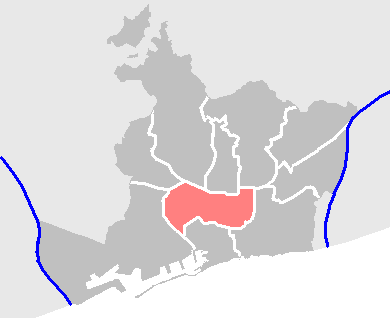
Barcelona’s neighbourhoods vary enough that it’s worth narrowing your search before you arrive rather than scrambling once you land. Eixample is the classic choice for professionals who want a central flat with high ceilings and good transport links, though its popularity keeps rents firm. Gràcia suits people who want a village feel inside the city, with narrow streets, independent shops and a strong local community, but flats here tend to be smaller and older buildings often lack lifts, which matters if you’re shipping a full household’s worth of furniture. Poblenou has become the go-to area for tech workers heading to the 22@ district, with newer buildings, wider streets and easier parking than the old town.
Families tend to look slightly outside the centre. Sant Cugat del Vallès, a 20 minute train ride from Plaça Catalunya, offers larger homes, gardens and easy access to several of the international schools that cater to English, German and French curricula. Castelldefels and Gavà, both south along the coast, appeal to families who want beach access and more space for the same budget, with a longer but manageable commute into the city for anyone working in the centre. Sitges, a bit further south, draws a mix of retirees and remote workers who prioritise a slower pace and a strong expat community, though it means a 30 to 40 minute drive or train journey if you need to be in Barcelona regularly.
Whichever area you choose, visit in person or arrange a video viewing before signing anything. Spanish rental contracts typically run for a minimum of a year, and landlords commonly ask for one or two months’ deposit plus the first month’s rent upfront, so budget for that cash outlay alongside your moving costs.
Cost of living in Barcelona
Barcelona sits in an odd middle ground on cost of living: noticeably cheaper than London, Amsterdam or Paris for everyday spending, but no longer the bargain it was a decade ago, particularly for housing. A one bedroom flat in Eixample or Gràcia typically rents for €1,000 to €1,400 a month, while the same size flat in Poblenou or further out runs closer to €800 to €1,100. A two or three bedroom family home in Sant Cugat or Castelldefels can range from €1,400 to €2,200 depending on condition and proximity to the station or school.
Groceries, eating out and transport remain reasonable by Western European standards. A monthly public transport pass covering the city zone costs a modest fixed amount set by the Autoritat del Transport Metropolità, and the metro network is extensive enough that many residents manage without a car, particularly in the central and northern districts. Utilities and internet are broadly in line with the rest of Western Europe, though air conditioning costs rise sharply in July and August, which is worth factoring in if you’re moving into an older building without good insulation.
Private health insurance is worth budgeting for even if you’ll eventually access the Spanish public system (managed through the Servicio Catalán de la Salud in Catalonia), since there’s usually a gap before you’re registered and some employers only offer it as an add-on rather than a default benefit.
Climate and the best months to arrive
Barcelona’s climate is one of its biggest draws, and it also shapes when it makes sense to move. Summers (June to September) are hot and can be humid near the coast, with temperatures regularly above 30°C in July and August, which is also when much of the city, including many local businesses and some removal firms, slows down for the traditional August break. Winters are mild by northern European standards, rarely dropping below 5°C, with more rain than visitors expect, particularly in October and November.
Spring (April to June) and early autumn (September to October) are generally considered the best windows for moving. The weather is comfortable for settling in and viewing flats on foot, schools are either finishing or starting their terms, which helps if you’re coordinating with a family’s school year, and shipping demand on Mediterranean routes hasn’t yet hit its summer peak, which can mean slightly more predictable transit times and marginally better pricing than June through August. If your move date is flexible, aim for March, April, September or October rather than the height of summer.
Your first weeks after arriving in Barcelona
The administrative side of settling in Barcelona takes a bit of patience, and it’s worth starting the process in the right order. Your NIE, which you’ll need for almost everything from signing a lease to opening a bank account, can sometimes be applied for before you arrive through the Spanish consulate in your home country, which saves time once you’re on the ground. If you haven’t done this, book an appointment (cita previa) at the relevant Comisaría or Oficina de Extranjeros as early as you can, since availability often runs weeks out.
Once you have an address, register at your local ayuntamiento (town hall) for your padrón, the municipal registration that proves residence and that you’ll need for school enrolment, healthcare registration and various other bureaucratic steps. Opening a Spanish bank account is usually straightforward once you have your NIE and proof of address, and most newcomers do this before their shipment arrives so they can pay customs charges or delivery fees without relying on a foreign card.
On the practical side, decide early whether you’ll need short term storage if your new home isn’t ready when your shipment lands, since timing a sea freight arrival to match a lease start date is rarely exact. Our storage page explains how that typically works. If you’re moving a full household rather than just a few boxes, it’s also worth understanding the difference between a household move and a smaller apartment move, since the service level and pricing structure differ.
The most useful thing you can do before any of this, though, is get a clear picture of your shipping costs and timeline while you’re still planning. You can get moving quotes from international movers who cover the Barcelona route, compare what they propose for your volume and dates, and build your moving date around a realistic transit window rather than guessing. If Barcelona isn’t your only option under consideration, our guides to moving to Amsterdam and moving to Dubai cover two very different alternatives worth comparing on cost and climate before you commit.

Tell us about your move
Share your route, timeline and what you're moving.


Compare moving options
Get tailored moving options from international specialists.
Move with confidence
Choose the right option and start your next chapter.